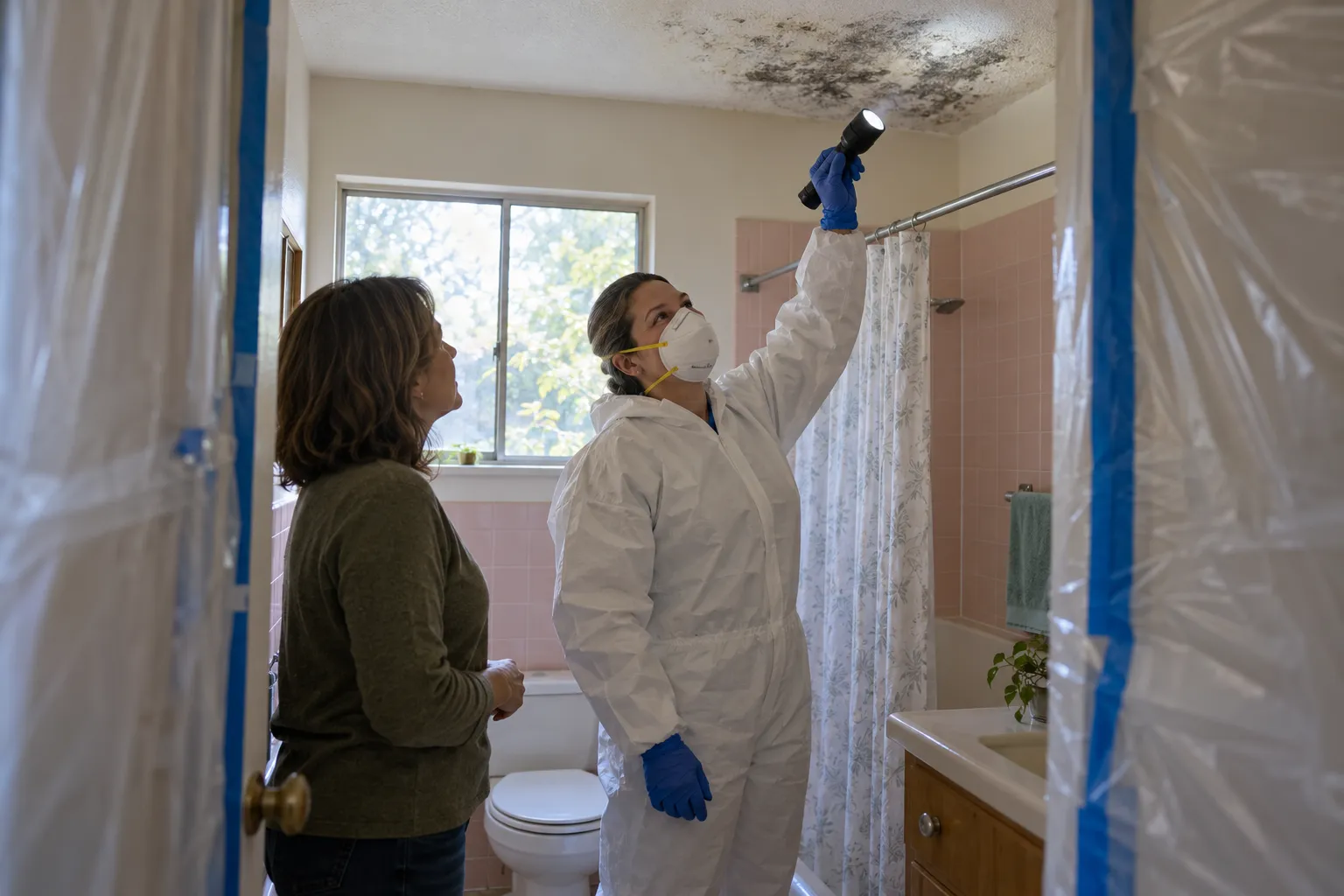
Black mold looks bad, and the first hour can feel stressful. Here is the good news. A small spot caught early is much easier to deal with than a big patch left for weeks. Secethnic Mold Help helps you skip the long search. We are a referral service, so we do not do the work ourselves.
We connect Sacramento homeowners with independent local providers in our network. A provider can look at the spot, test it if needed, and explain how to remove it. This page walks you through what to do first, what to leave alone, and what to ask. Look, photo, then call. Then you can request an estimate and decide what comes next, with no obligation.
Found Black Mold? Do This First
Dark spots on a wall or ceiling can rattle you. Take a breath. Small spot, small fix, as long as you move while it is still small.
Here is your first-hour checklist:
- Stop touching it. No scrubbing, sanding, or dry brushing. That throws spores into the air.
- Shut off fans, and turn off the HVAC if the spot is near a vent.
- Photograph it from a few feet back, then up close.
- Close the door. Tape plastic over gaps if you have it.
- Keep kids, pets, and anyone with breathing trouble out of the room.
What "Black Mold" Really Means
People use the name for any dark green or black growth. Many molds look alike. Color alone cannot tell you the type. A lab test can.
So treat every dark patch with care, but do not panic. Whatever the type, the plan is the same: find the moisture, take out the growth, and dry the area.
Where It Likes to Hide
Mold needs moisture and something to eat. Check these spots with a flashlight:
- Under sinks and around tub and shower edges
- Bathroom and laundry ceilings
- Window frames where condensation collects
- Attic roof decks after winter rain events
- Crawl spaces under raised foundations
- Closets on outside walls of stucco homes
- Walls behind leaky pipes or water heaters
Older bungalows and 1950s to 1980s tract homes often have aging plumbing and thin ventilation. Slab homes can wick moisture up into lower walls. Dry seasons do not clear the risk. A slow leak keeps feeding growth all year.
Signs It Is More Than a Surface Spot
Some clues say the problem runs deeper:
- A musty smell that stays after cleaning
- Paint that bubbles or peels
- Baseboards that warp or soften
- Stains that return within days
If you feel ill and think mold is the cause, talk with your doctor. A provider cannot diagnose health issues.
Know When to Stop
A tiny patch on a hard, sealed surface, like tile, is a fair DIY job. Wear an N95 mask, gloves, and goggles. Use detergent and water, wipe once, and bag the rags.
Stop and call a pro if:
- The patch is larger than about 10 square feet
- It sits on drywall, insulation, carpet, or ceiling tiles
- It is near or inside the HVAC system
- It keeps coming back
- You can't find the water source
Why Bleach Usually Isn't Enough
Bleach can lighten a stain on a hard surface. On drywall or wood, the water in it soaks in and feeds the roots. The wall looks clean, then the spots return.
One safety rule: never mix bleach with ammonia or other cleaners. The fumes are dangerous.
How Professional Removal Works
A local provider will usually follow steps like these. Details vary by job.
Seal Off the Area
Plastic sheeting and negative air keep spores from drifting into other rooms.
Remove What Can't Be Saved
Badly affected drywall, insulation, or carpet gets cut out, bagged, and carried out.
Clean the Rest
Studs and hard surfaces get scrubbed and HEPA vacuumed. Air scrubbers filter the room.
Dry and Recheck
The space is dried fully. Many providers test again to confirm the work did its job.
Fix the Cause or It Comes Back
Removal without a moisture fix is a short-term win. Look for leaking pipes, a weak roof patch, clogged gutters, or soil that slopes toward the foundation. Run bath fans. Keep indoor humidity under about 50 percent. A cheap hygrometer helps.
A provider can often point out the likely source. A plumber or roofer may need to handle the repair itself.
What About Your Belongings?
Hard items like glass, metal, and sealed plastic can usually be wiped clean. Fabrics may wash well. Porous items such as old cardboard, books, and foam are harder to save.
Photograph everything before you toss it. Keep a simple list. Some policies may cover sudden damage, so check your policy. Providers can often help document damage for a claim.
Questions to Ask the Provider
Before you agree to anything, ask:
- Do you handle residential mold removal and the testing, or only one?
- Can you explain certified mold testing and who does the sampling?
- How will you contain the area?
- What is in the written quote, and what could change the price?
- How do you plan to confirm the job is done?
Ready to Talk to a Provider?
You already did the hard part by spotting it early. Request a callback to check provider availability in the Sacramento area, or use the form to request an estimate. You decide what happens next.
What's Included
Containment and Air Control
Plastic barriers and filtered air help keep spores out of the rest of your home.
Removal of Damaged Materials
Soaked drywall, insulation, or carpet that can't be cleaned gets cut out and bagged for disposal.
Deep Cleaning
Framing and hard surfaces are scrubbed and HEPA vacuumed.
Drying and Recheck
The space is dried out, and many providers test again to confirm the work.
Typical Black Mold Removal Costs
Prices vary a lot by size, materials, and how hard the area is to reach. These are typical U.S. ranges only. Always get a written quote before work begins.
| Item | Typical range | Notes |
|---|---|---|
| Small area removal | $500 – $1,500 | One wall patch or a bathroom ceiling |
| Larger room or multi-area job | $1,500 – $6,000 | More containment and materials |
| Attic or crawl space work | $1,500 – $7,000 | Hard access raises the price |
| Lab testing and sampling | $300 – $1,000 | Depends on number of samples |
| Drywall and insulation replacement | $400 – $2,500 | Often priced apart from removal |
| Fixing the moisture source | $150 – $3,000 | Pipe, roof, or drainage repair |
How It Works
Look and Photograph
Check the spot with a flashlight, take clear photos, and keep your hands off it.
Tape Off the Area
Close the door, turn off nearby fans, and seal gaps with plastic.
Contact a Provider
Request a callback to check availability, or request an estimate through the form.
Review the Written Quote
Compare scope and price, ask questions, then choose how to move forward.
Why Call Secethnic Mold Help
Less Time Searching
Skip the endless scrolling and reach an independent local provider with one step.
Plain Guidance
Simple, calm tips tell you what to do first and what to leave alone.
Local Providers
Providers in our network work on homes like yours, from stucco ranches to older bungalows.
No Pressure
Request an estimate, compare it, and decide on your own time. No obligation.
Other Services
Need black mold removal in Sacramento?
Found mold or a musty smell? Request a callback to check provider availability, or send the request form and a local provider will follow up.
No obligationBlack Mold Removal FAQ
Can I remove black mold myself?
A tiny patch on a hard, sealed surface is often a fair DIY job with a mask, gloves, and goggles. For drywall, large areas, or anything near your HVAC, hand the job to a local provider.
Does bleach kill black mold?
Bleach may lighten stains on hard surfaces, but it often fails on porous materials like drywall and wood. Roots can stay behind, so the mold returns. Never mix bleach with ammonia or other cleaners.
How much does black mold removal cost?
Typical U.S. costs run from about $500 for a small spot to several thousand for large or hidden areas. Prices vary by job, so ask for a written quote before work starts.
Tell us what happened
Found mold or a musty smell? Request a callback to check provider availability, or send the request form and a local provider will follow up.
No obligation